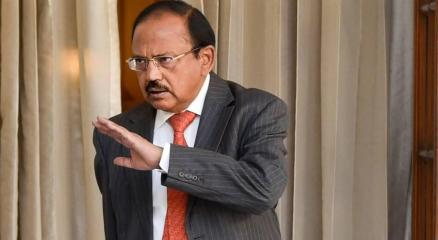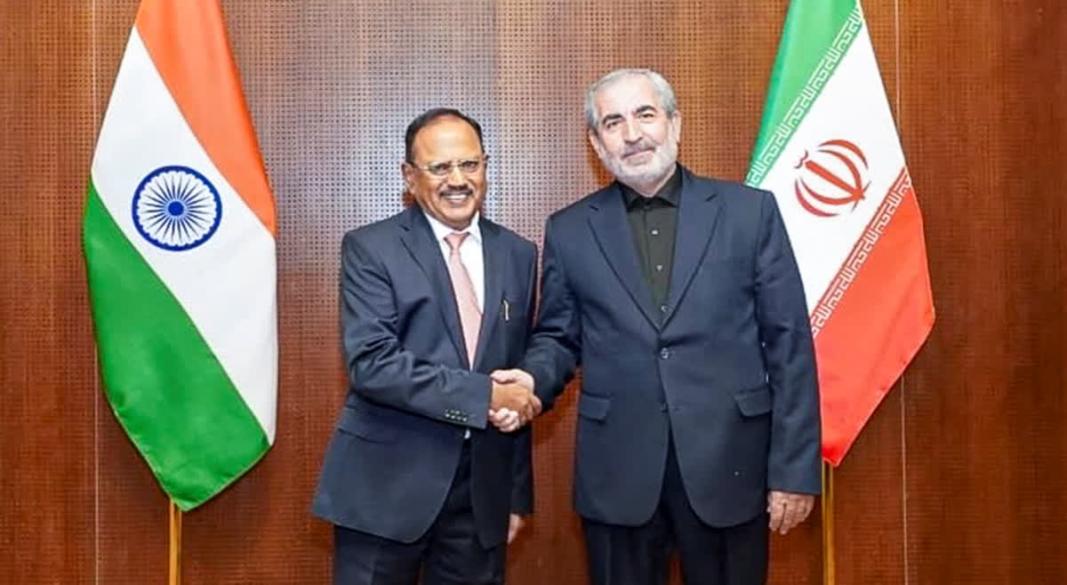
New Delhi, Jun 22: National Security Adviser Ajit Doval on Monday held wide-ranging talks with senior Iranian security official Ghadir Nezamipour focusing on the evolving security environment in West Asia.
Nezamipour, the Deputy Secretary for Defence Affairs at Iran's powerful Supreme National Security Council (SNSC), is in New Delhi to attend a conclave of BRICS.
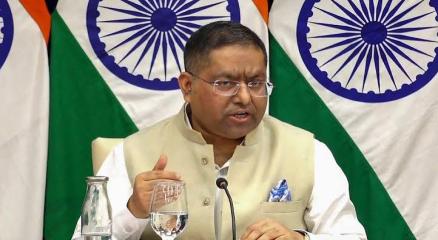
"Both sides reviewed the ongoing situation in West Asia. They also discussed cooperation under the BRICS platform and India-Iran bilateral ties," External Affairs Ministry spokesman Randhir Jaiswal said on social media.
It is the first visit to India by a senior official from Iran after it struck a peace agreement with the US.
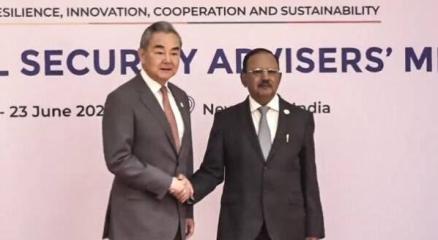
The NSAs of BRICS nations will hold extensive discussions on the security scenario in the region on Tuesday. The conclave officially begins on Monday.
India to host key BRICS security conclave amid rising geopolitical tensions.
Chinese Foreign Minister Wang Yi, Russian NSA Sergei Shoigu, and other top BRICS security officials are set to be part of the deliberations.
The conclave will be chaired by NSA Doval.
New Delhi is hosting the conclave in its capacity as the current chair of the influential grouping.
BRICS, originally comprising Brazil, Russia, India, China, and South Africa, expanded in 2024 to include Egypt, Ethiopia, Iran, and the United Arab Emirates (UAE), with Indonesia joining in 2025.
BRICS has emerged as an influential grouping as it brings together 11 major emerging economies of the world, representing around 49.5 per cent of the global population, around 40 per cent of the global GDP and around 26 per cent of the global trade.
The top BRICS security officials are expected to deliberate extensively on the overall regional security scenario including the situation in West Asia as well as the Russia-Ukraine conflict.
The Indian side is likely to raise its concerns over terrorism including cross-border terrorist activities targeting Jammu and Kashmir by terror groups based in Pakistan.
The Pakistan-Afghanistan hostilities may too figure in the deliberations, people familiar with the matter said.
The BRICS foreign ministers' meeting in May had ended without a joint statement as sharp differences between Iran and the UAE over the West Asia conflict were on full display.
BRICS operates under a framework of consensus and India had issued a chair's statement and outcome document featuring two specific paragraphs where unanimity could not be reached.
New Delhi, May 12: A massive protest organised by the National Students' Union of India (NSUI) broke out near the Shastri Bhawan on Tuesday, against the alleged paper leak in NEET-UG this year. The exam was held on May 3, following which allegations of paper leak surfaced, triggering investigations by the Rajasthan Special Operations Group (SOG) and central agencies. Earlier, the National Testing Agency (NTA) announced the cancellation of NEET-UG 2026, and said the examination will be re-conducted on dates to be notified separately. In a statement, the NTA said the decision was taken with the approval of the Government of India in the interest of maintaining transparency and preserving trust in the national examination system.
Srinagar, Feb 12: Jammu and Kashmir recorded over 15.48 lakh traffic violation cases in 2025, with authorities collecting more than Rs 34.17 crore as penalty under the Motor Vehicles Act, the Centre informed Parliament on Thursday. The information was shared in the Lok Sabha in response to a question raised by MP Janardan Singh Sigriwal. According to the official data, 15,48,525 challans were issued across the Union Territory in 2025, while the penalty amount recovered stood at Rs 34,17,36,740. The figures further show that in 2024, a total of 15,44,105 violations were registered with a penalty collection of around Rs 43.40 crore, while in 2023, 12,38,584 challans were issued and Rs 34.56 crore was collected. For the current year, till February 8, 2026, Jammu and Kashmir has recorded 1,63,531 traffic violation cases, with revenue collection of about Rs 2.11 crore. The Ministry of Road Transport and Highways stated that stricter penalties under the Motor Vehicles (Amendment) Act, 2019 are aimed at ensuring better compliance and deterrence. It also said that traffic enforcement falls under the jurisdiction of States and Union Territories. The government has issued a Standard Operating Procedure (SOP) for electronic monitoring and is promoting technology-driven enforcement through Automatic Number Plate Recognition (ANPR) cameras integrated with the VAHAN database. Awareness campaigns under the Sadak Suraksha Abhiyan are also being carried out to improve road safety.
New Delhi, Jan 25: The Dental Council of India (DCI) has directed all universities and dental colleges across the country to strictly ensure a minimum of 80 percent biometric attendance for Post Graduate students before allowing them to appear in examinations. The decision has been taken to curb absenteeism among postgraduate dental students. According to a circular issued by the Dental Council of India-a statutory body under the Ministry of Health and Family Welfare, Government of India, the decision has been taken after multiple complaints were received from dental colleges in Rajasthan, Haryana and Uttar Pradesh regarding non-attendance of PG students. "The matter was examined by the Grievance Sub-Committee of the DCI in its meeting held on November 24, 2025," the circular reads. It reads that after detailed discussion and deliberation, the committee recommended that all universities and dental colleges must ensure compliance with Regulation 18(a)(i) of the DCI Master of Dental Surgery Course Regulations, 2017, which mandates at least 80 per cent attendance. "The recommendation of the Grievance Sub-Committee has been approved by the Executive Committee of the Dental Council of India through circulation and has now been formally communicated for information and necessary action," the circular reads. As per the circular, all the universities and dental colleges have been directed to ensure minimum 80 per cent biometric attendance of all PG students before permitting them to appear in examinations. The order, issued by Deputy Secretary Dental Council of India Mukesh Kumar, is expected to be implemented with immediate effect across the country.
Srinagar, Jan 8: Contractual faculty members working in government degree colleges of Jammu and Kashmir Higher Education Department (HED) have expressed strong resentment over what they term as a glaring disparity in salaries, demanding revision of their pay in line with University Grants Commission (UGC) norms and regularisation of their services. The faculty, many of whom hold PhDs and are qualified through NET, SET and JRF, said they have been denied UGC-recommended pay scales despite discharging academic responsibilities equivalent to their regular counterparts. “Hundreds of highly qualified scholars have been pushed into silent suffering. For years, we have been assured that our pay revision is under consideration, but nothing has materialised so far,” said Dr Ishfaq Gowhar, a contractual faculty member. Earlier, Director Colleges J&K had acknowledged the legitimacy of the faculty’s demand, stating that while the issue was genuine, its implementation involved significant financial implications due to the large number of contractual appointments. “We are aware that they deserve salary enhancement, but the number of contractual faculty is huge and it has financial implications,” he earlier said. Dr Gowhar pointed out that contractual lecturers, who form the backbone of the higher education system, continue to work on a fixed monthly honorarium of Rs 28,000, which has remained unchanged for nearly a decade. “The irony is that a Class IV employee with a Class 10 qualification draws a salary exceeding Rs 50,000, while doctorate-holding teachers engaged in teaching, mentoring and academic research are paid a fraction of that,” he said. He added that institutions such as SKUAST-K, University of Kashmir and Islamic University of Science and Technology (IUST) have implemented revised UGC pay scales, but the Higher Education Department has failed to extend similar treatment to its contractual faculty. Dr Gowhar said the demand for “equal work, equal pay” gets prominently featured in election campaigns, raising hopes among contractual teachers. “Promises were made and slogans echoed during elections, but once the process ended, our voices were reduced to silence. Even meeting officials now feels impossible,” he said. He said contractual faculty were not seeking privileges but dignity, fairness and recognition for their service. The faculty appealed to the Jammu and Kashmir Lieutenant Governor Manoj Sinha, Chief Minister Omar Abdullah and the Education Minister to intervene and take concrete steps towards addressing their long-pending demands. “This issue is not merely about salaries. It is about survival, justice and dignity in the classrooms of Jammu and Kashmir,” he said.
Srinagar, March 6: Around 17 candidates from Jammu and Kashmir have qualified the Civil Services Examination (CSE)-2025, the result for which was declared by the Union Public Service Commission (UPSC) on Friday. The commission recommended a total of 958 candidates for appointment to the Indian Administrative Service (IAS), Indian Foreign Service (IFS), Indian Police Service (IPS) and various central services. Anuj Agnihotri, an MBBS graduate, has topped the civil services examination 2025, while Rajeshwari Suve M and Akansh Dhull have got the second and third ranks respectively. According to the official list released by the UPSC the 17 candidates from J&K who have figured in the final merit list include Suvan Sharma (Rank 148), Sugandha Gupta (207), Towseef Ganie (Rank 254), Ritika (Rank 456), Sooyash Shivam (Rank 572), Muneeb Parrah (Rank 581), Ghulam Din (Rank 683), Dwarka Gaadhi (Rank 721), Akash (Rank 747), Koh E Safa (Rank 763), Yasaar (Rank 811), Abhishek (Rank 820), Pankaj (Rank 856), Mohammad Ajaz (Rank 869), Azhar (Rank 886), Sarfraz (Rank 936), and Irfan (Rank 957). The results were declared after conducting the written examination in August 2025 followed by the personality tests (interviews) conducted between December 2025 and February 2026. As per the result notification issue by the UPSC, a total of 958 candidates have been recommended for appointment against 1087 vacancies reported by the government for the examination cycle. These include 180 vacancies in the IAS, 55 in the IFS, 150 in the IPS, 507 in Central Services Group A and 195 in Group B services. Of the total recommended candidates, 317 are from the general category, 104 from the economically weaker sections, 306 from other backward classes, 158 from scheduled castes and 73 from scheduled tribes. A consolidated reserve list of 258 candidates has also been published in accordance with the rules. The claims of recommended candidates regarding reservation categories will be subject to verification by the concerned authorities. The UPSC has stated that the candidature of 348 recommended candidates has been kept provisional, while the result of the two candidates has been kept withheld. The CSE is conducted annually in three stages- preliminary, Mains and interview by the UPSC to select officers of the Indian Administrative Service (IAS), Indian Foreign Service (IFS) and Indian Police Service (IPS) among others. The civil services (preliminary) examination 2025 was conducted on May 25 of 2025. A total of 937876 candidates applied for this examination, out of which 5,76,793 actually appeared in the test. A total of 14,161 candidates qualified for appearance in the written (Main) examination which was held in August, 2025. Of these, 2736 candidates had qualified for the personality test (interview) of the examination. Prime Minister Narendra Modi congratulated the candidates who qualified the UPSC exam. "Congratulations to all those who have successfully cleared the Civil Services Examination, 2025. Their dedication, perseverance and hard work have led to this significant milestone. Wishing them the very best as they embark on a journey of serving the nation and fulfilling the aspirations of the people," PM Modi wrote on his official X handle. "To those who may not have secured the desired outcome in the Civil Services Examination, I understand that such moments can be difficult. However, this is only one step in a larger journey. Many opportunities lie ahead, both in future examinations and in the many avenues through which you can contribute to our nation. My best wishes for the road ahead," his post on X reads. UPSC chairman Ajay Kumar announced the declaration of the result and congratulated the candidates who qualified the exam. "Congrats to all successful candidates as you begin a career of service to the nation. For those who did not make it-the learning from this journey will guide you in the paths ahead," UPSC Chairman wrote in a post on X. Among the 17 candidates from J&K who qualified UPSC exam inlcude a visually impaired candidate Irfan Ahmad Lone, a resident of Manzpora in the Naidkhai area of Bandipora.


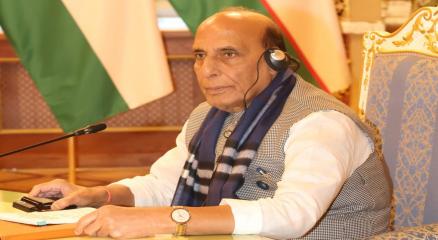
Dushanbe, Oct 20: Defence Minister Rajnath Singh Tuesday called upon Shanghai Cooperation Organisation (SCO) member states to work collectively to dismantle the entire ecosystem of terrorism. He said there could be no justification for the menace and no double standards in dealing with those who finance, support or provide safe havens to terrorists. Addressing the 25th meeting of the SCO Council of Heads of Government in Dushanbe, Tajikistan, Singh described terrorism as one of the gravest threats to peace and development, saying it claims innocent lives, disrupts investment and commerce, fuels radicalisation and deprives young people of opportunities. “There can be no justification for terrorism, no double standards in addressing it, and no place for those who finance, support, or provide safe havens to terrorists,” he said. Referring to the deliberations at the SCO Summit in Bishkek in August-September, Singh recalled Prime Minister Narendra Modi’s emphasis on concrete action by the organisation on security, connectivity and economic opportunities. He said India supported inclusive and mutually beneficial economic engagement among member states, stressing that the SCO must adhere to sovereign equality, consensus and mutual respect. Singh said the creation of additional institutions would not necessarily translate into better outcomes, arguing that new mechanisms should address clearly identified needs, avoid duplication and deliver practical benefits to member countries. Highlighting the challenges posed by geopolitical tensions, trade and supply-chain disruptions, energy and food security concerns and technological divides, the Defence Minister called for stronger cooperation to facilitate trade and investment, build resilient supply chains and use technology to drive development. He reaffirmed India's support for adopting an action plan for the Multilateral Trade and Economic Cooperation Programme for 2026-2030, emphasising that the benefits of economic cooperation must reach all sections of society. Singh also welcomed the decisions taken at the Bishkek summit to establish the Universal Centre in Tashkent and the Anti-Drug Centre in Dushanbe as permanent SCO bodies. Their effectiveness, he said, would depend on efficient coordination and timely implementation. On regional connectivity, Singh said India supported initiatives aimed at linking markets, facilitating trade and opening new avenues for development. He cited the International North-South Transport Corridor and Chabahar Port as important avenues for connecting Central Asia with wider markets. He however stressed that connectivity projects must be based on consultation and respect for the sovereignty and territorial integrity of all countries, warning that initiatives lacking these principles would not be sustainable. He also called for moving beyond physical infrastructure by simplifying customs procedures, promoting digital documentation, improving logistics and adopting interoperable digital solutions to reduce the cost of doing business across the region. The Defence Minister highlighted a symposium on financing infrastructure projects in Central Asia held in Mumbai earlier this month and thanked Central Asian countries and SCO partners for their participation. He also acknowledged the organisation of the first SCO Asian Economic Dialogue. Emphasising the need to measure cooperation through tangible benefits, Singh said the SCO's success should be judged by the opportunities it creates for youth, markets opened for entrepreneurs, technologies made accessible to farmers and small businesses, and connections fostered among societies. He cited India's Digital Public Infrastructure as an example of technology-driven development, saying it had transformed public service delivery and strengthened financial inclusion. He also highlighted India's start-up ecosystem and its focus on women-led development. Singh said India's initiatives, including the International Solar Alliance and the Coalition for Disaster Resilient Infrastructure, contributed to affordable clean energy and climate-resilient development. He also referred to Mission LiFE, which promotes sustainable lifestyles and responsible consumption, and the Global Biofuel Alliance, aimed at advancing cleaner energy solutions. Calling upon the SCO to build on its 25-year foundation, Singh urged member states to pursue a forward-looking roadmap centred on consensus-driven cooperation and tangible outcomes. He reaffirmed India's commitment to working with all member countries and invited them to participate in the first SCO Civilisational Dialogue Forum, to be hosted by India later this year. The meeting reviewed progress in multilateral economic and trade cooperation and discussed ways to strengthen collaboration in transport, finance, the digital economy and social development. The heads of delegation adopted a joint communiqué covering the meeting's outcomes, the SCO budget for 2027, relevant financial and administrative decisions, and the action plan for the Multilateral Trade and Economic Cooperation Programme for 2026-2030. The SCO Council of Heads of Government is a key mechanism for promoting economic and other forms of practical cooperation among member states. India has been a full member of the organisation since 2017.
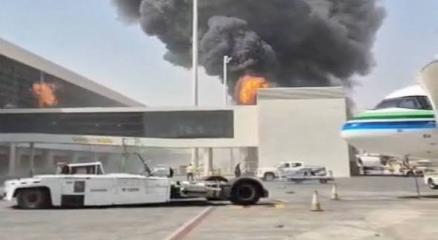
New Delhi, Oct 11: At least 11 Indians were injured in the deadly attack on Riyadh's King Khalid International Airport that killed 12 people and wounded more than 300 others, the Indian Embassy in Saudi Arabia said on Sunday. In a statement on X, the Indian Embassy said it had been following up on Saturday's attack, in which 12 people were killed and more than 300 injured. "It is learnt that 11 Indians are among those injured in the attack. Embassy has been in touch with local authorities to enquire about their well being. Our officials have also reached out to the hospital authorities. We will provide further updates as they become available," the embassy wrote in a statement on X. Earlier, the Ministry of External Affairs (MEA) issued a strong condemnation of the repeated attacks on King Khalid International Airport over the past several days, including the October 10 strike. "We strongly condemn the repeated attacks on Riyadh's King Khalid International Airport over the past few days, including the dastardly attack on October 10, which have led to loss of lives, injuries and damage to property. We express our condolences to the families of the deceased and wish speedy recovery to the injured persons," the ministry said. New Delhi also called for an immediate end to attacks targeting civilians and civilian infrastructure. "The repeated attacks on civilians and civilian infrastructure are completely unacceptable and must cease immediately," the statement added. India expressed solidarity with Saudi Arabia, emphasising its support for the kingdom’s sovereignty and its hope for a return to peace and normalcy in the region. "We stand in solidarity with the people and the government of the Kingdom of Saudi Arabia in defence of their sovereignty, and hope that peace and normalcy returns to the region at the earliest," the MEA said. Meanwhile, the Houthis renewed warnings to airlines, travellers and airport workers, urging them to avoid Saudi airports and airspace following the deadly attack. "We renew our warning to all airlines, experts, employees, workers and travellers against using Saudi airports and airspace, as they are vulnerable to attack and have become a theatre of operations for our forces, with the exception of the airports in (the holy cities of) Mecca and Medina," the group said in a post on X. "We urge everyone to take our warnings seriously, and Saudi Arabia bears responsibility for any failed interceptions." Saudi authorities have temporarily suspended airport operations while assessing the damage and safety conditions. The airport attack comes amid an intensification of fighting between the Houthis and Saudi-backed Yemeni government forces. Saudi Arabia has stepped up its military involvement in Yemen in recent weeks, launching strikes against the rebels and backing a government counteroffensive after the Houthis seized strategic territory along the Red Sea coast last month. The Houthi-run foreign ministry warned that further Saudi military action would prompt a stronger response. "Unless the Saudi enemy stops its aggression and interference in Yemen, worse is yet to come, God willing," the ministry said in statements carried by Houthi-run Al Masirah television. Despite the security concerns, Saudi Arabia's energy ministry said a major international energy conference would proceed in Riyadh. The five-day WPC Energy Congress is being held at a convention centre around 10 kilometres from the airport. Saudi authorities have also shifted schools in Riyadh to remote learning from Sunday until Thursday as precautionary measures remain in place.
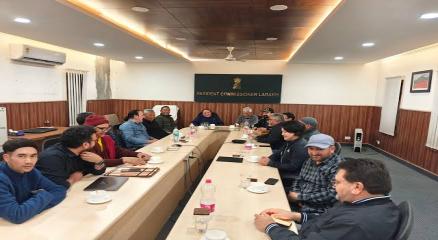
Srinagar, Oct 10 : A high-level team of the Union Home Ministry will hold a fresh round of talks with Ladakh's political leadership here on October 15, with the Centre and local groupings still appearing divided over the way forward on the region's core demands. Top sources said the Leh Apex Body (LAB) will submit its replies to nine queries raised by the MHA in the previous rounds of discussions. The Kargil Democratic Alliance (KDA). However, is pressing for a draft proposal from the Centre before the talks proceed — a demand that has become a sticking point between the two sides. Ladakh MP, a former MP and other senior leaders from the region are likely to attend the meeting, sources said. The MHA has been engaging with Ladakh's stakeholders since 2023, but the talks are yet to produce a breakthrough on the demands for full statehood and Sixth Schedule status — the twin issues that have driven sustained protests in the union territory.